
Story banking
.png)

KEY DEFINITIONS
FOUR TERMS TO KNOW
STORY BANK
Values
Challenge–Choice–Outcome
Vivid moment
INTRODUCTION
WHY STORIES?
Leading with values, not policy lists, is what moves people.
Voters don't connect with 10-point plans. They connect with people. A specific personal story does three things:
01
and what you care about
02
03
Think about the difference between:
"My mom was a teacher for 30 years. I watched her buy supplies out of her own paycheck and stay late every night for kids who needed extra help. That's why I'm running."
Specific and human — it shows a value in action and lets the listener see themselves in the moment. It answers "why" without ever saying the word "policy".
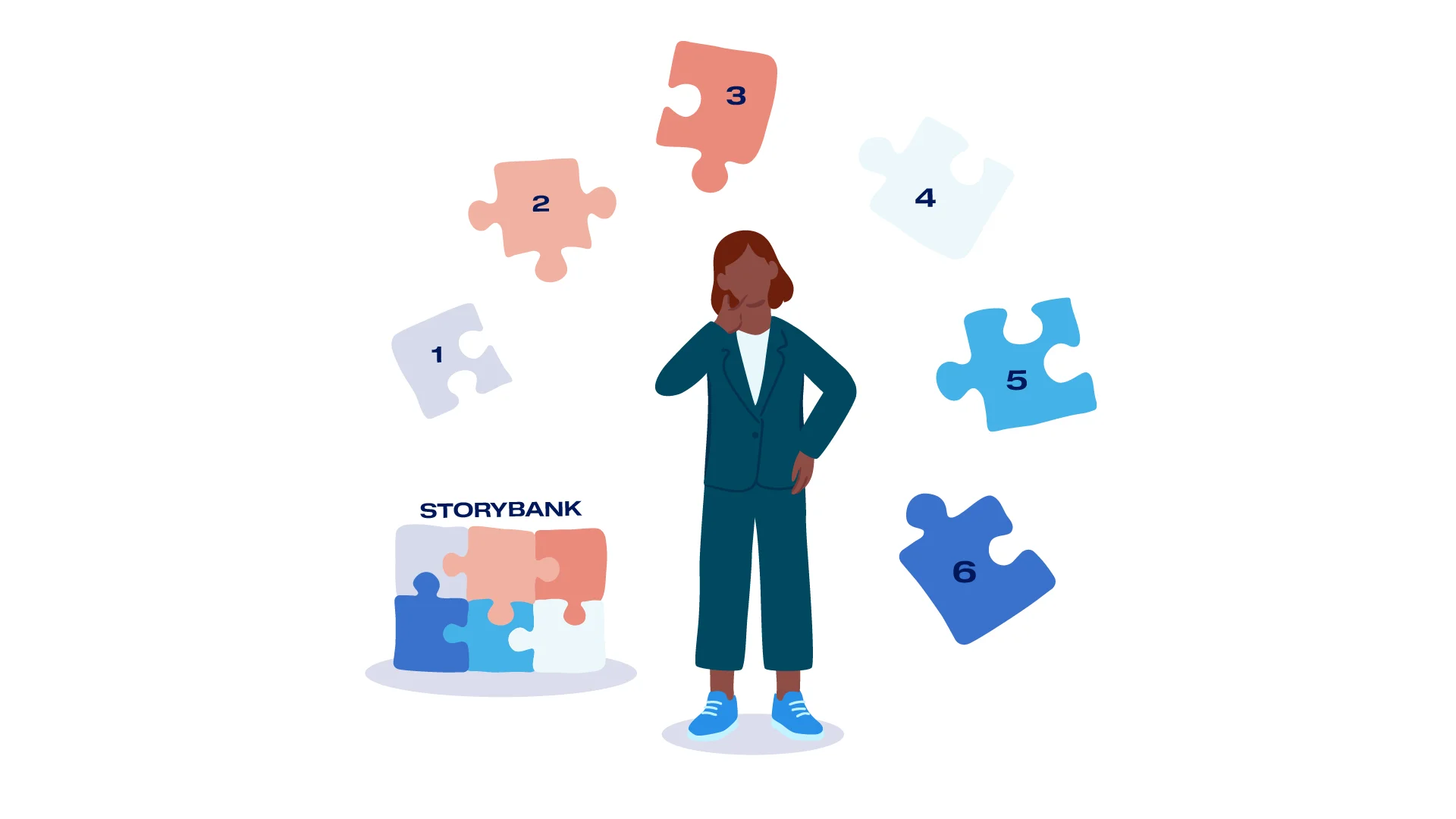
The second answer is a puzzle piece. Once you've built your story bank, you can weave these moments into answers, social media content, speeches, and interviews — wherever you need to connect with someone.
After you story bank, share it with your team. See what they think about where it could be best to weave into your stump, at the doors, and into your messaging to voters. You may not know where and when to use this most effectively, but once you have it cataloged, it is easier to share.
What is story banking?
A story bank is your personal library of vivid moments organized around the values that drive your campaign.
Your stories should be:
- Specific and detailed, not vague or general
- Grounded in real moments from your life
- Short enough to use as an answer (4–6 sentences)
- Flexible enough to use in many different contexts
You’ll use your story bank when:
- A voter asks why you're running
- You're being interviewed by a reporter
- You're creating social media content
- You're making a case at a community event or debate
- Anytime you're inviting someone to join you in action
THE MODEL
A story-based answer
In this example, a candidate for city council answers the question "Why are you running?" using a story from their bank.
As you watch or read, listen for:
- The specific moment or scene (not a general statement)
- The values revealed by that moment
- How it connects to the campaign and the audience
- The clear, tangible ask at the end
- Anytime you're inviting someone to join you in action
Example: Aliyah Spring is running for City Council. She's an AmeriCorps alum and a first-time candidate.
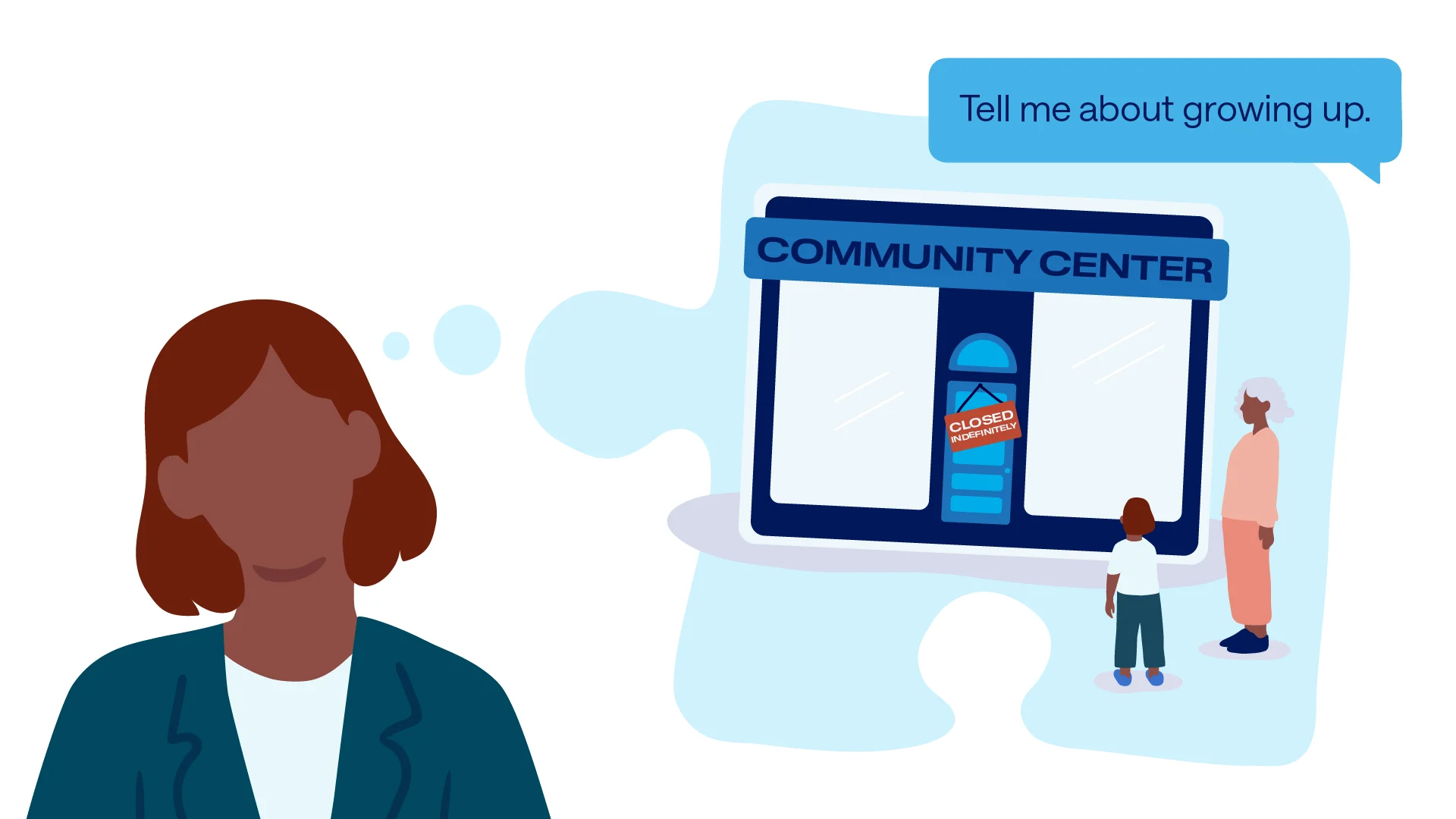
"Tell me about growing up."
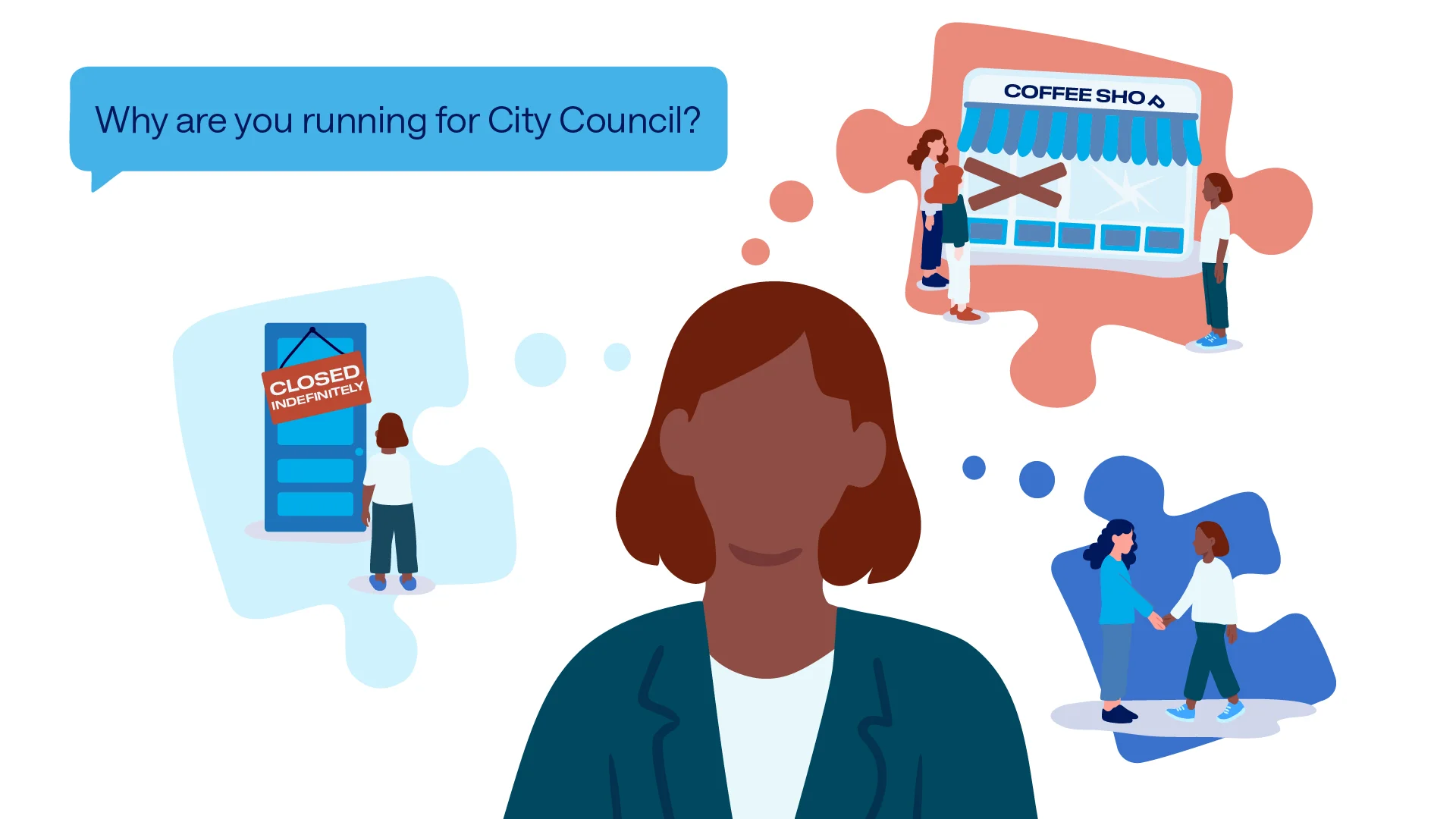
“Why are you running for City Council?”
NEXT STEPS
On your own
Next, build your own story bank.
Use these questions to get started:
- Tell me about growing up.
- Tell me about your first job.
- Tell me about your experience serving your country or community.
- Tell me about a difficulty you experienced and how you addressed it.
- Why are you running for _____?
For each story:
- Write out the specific moment: where you were, how old, who was there, etc.
- Identify the value that moment reveals (e.g., fairness, hard work, community, resilience)
- Write a 4–6 sentence version you could say out loud to a voter
- Note which campaign topics or questions this story could answer
Aim to have at least 4–6 stories in your bank before your first major campaign event or interview.
Story Bank Builder template (one page per story with prompts for moment, values, 4–6 sentence version, and use cases).
The Challenge–Choice–Outcome storytelling framework is based on the Public Narrative framework developed by Marshall Ganz.
Have questions about story banking?